

 BBC
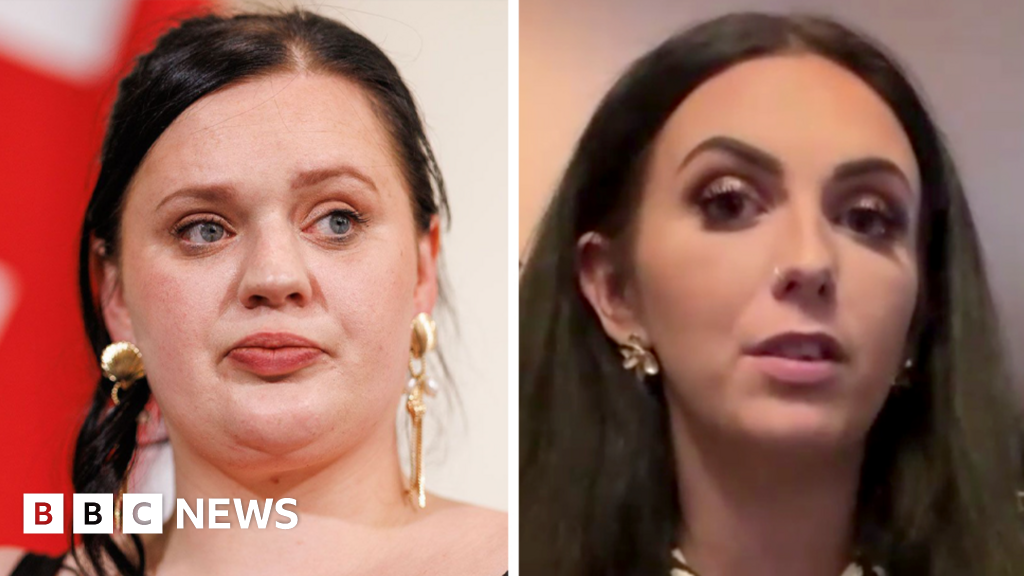
BBCA fourth survivor has quit the national grooming gangs inquiry, her lawyer has confirmed, over concerns the inquiry is being diluted and that their voices are being silenced.
Jess, which is not her real name, joins Fiona Goddard, Ellie Reynolds and Elizabeth, also not her real name, in standing down from the survivors’ panel.
However, a fifth survivor, Samantha Walker-Roberts, has told the BBC she will stay on the panel and is calling for the inquiry to widen its remit beyond grooming.
Home Secretary Shabana Mahmood has sought to reassure survivors the inquiry will not be “watered down”.
The national inquiry into grooming gangs was announced by Prime Minister Sir Keir Starmer in June, with powers to compel witnesses and a panel of survivors is being set up to oversee the process.
The terms of the inquiry are still being worked out but the government says it is close to selecting someone to chair it.
One potential chair, Annie Hudson, withdrew her nomination earlier this week when fears were raised that her social worker background could be a conflict of interest, but another nominee, Jim Gamble, a former police chief and child abuse expert, met survivors on Tuesday.
It is not known how many survivors of abuse are involved in the panels, although there are thought to be two panels and about 20 survivors involved in total.
Ms Goddard has told the BBC she was on one panel with about 10 survivors and thinks eight of those were definitely grooming gang survivors, with three Home Office officials and three staff from the charity NWG, which is managing the panels.
Ms Goddard and Ms Reynolds quit the panel on Monday, followed by Elizabeth on Tuesday and now Jess, her lawyer Amy Clowrey confirmed.
Jess told GB News: “When I found out the two potential chairs were a former police officer and a former social worker, I was shocked and I didn’t know how they could be involved.
“They were both part of a profession that failed all of us.”
Speaking to BBC 5 Live, Ms Clowrey said she represented Jess and Ms Goddard, and it was “inevitable” women would withdraw when restrictions were placed on what they could and could not talk about, which they found “really difficult to swallow”.
“We know from working with survivors of any type of abuse that those that have been silenced and have found their voice will not tolerate that,” she said, adding “it’s disappointing that the government didn’t recognise that.
“They feel that it’s being silenced and that it’s all being really watered down, because there’s been questions about widening the scope to make it more about child sex abuse generally and not about the grooming gangs.”
Another survivor, Elizabeth, told BBC Radio 4’s Today programme she was worried officials kept trying to dilute the inquiry by broadening its scope to wider issues of child sexual abuse and exploitation.
“We don’t want it widening,” she said. “We want it to be on grooming gangs – we want our voice.”
Writing in the Times newspaper on Wednesday, Mahmood insisted the remit of the inquiry “is not, and will never be, watered down on my watch” and will “explicitly examine the ethnicity and religion of offenders”.
“In time, we came to know this as the ‘grooming gangs’ scandal, though I have never thought the name matched the scale of the evil,” she added.
“We must call them what they were: evil child rapists.”
She added that “the door will always remain open” to survivors re-joining the panel, but if not “I owe it to them – and the country – to answer some of the concerns that they have raised.”
Samantha Walker-Roberts, from Oldham, who wants the scope of the inquiry to include victims of other types of sexual abuse, so they are not “silenced,” has criticised those who have quit.
She was the victim of a grooming gang when she was 12 – but she was also raped and abused by a man who groomed her online, and as a younger child she was raped and abused by older men who she met through friends.
Ms Walker-Roberts told the BBC: “This is a one-of-a-kind type of inquiry where survivors are in control and it’s wrong that certain survivors get special treatment to be part of this.
“It’s wrong certain survivors can’t see past their own trauma because everyone deserves to be part of this and deserves justice…
“Survivors like us need to be part of this, so the scope needs to be widened otherwise we’re going be silenced.”
She added she had no problem with a chair who had a background in policing or social work, as this had been “proven” to work with previous review chairs, where “one was former cop, one was former social worker.”
Responding to the resignations of Ms Goddard and Ms Reynolds in the House of Commons on Tuesday, Safeguarding Minister Jess Phillips said it was “untrue” the government was seeking to dilute the focus of the inquiry.
Phillips also stressed the difficulty of finding a chair who was not attached to an institution “that didn’t fail these girls over the years, including our courts who took the children away from grooming gang victims, who criminalised some of them”.
“There is no institution in our country that hasn’t failed,” she added, rejecting suggestions a judge should lead the inquiry, arguing that Baroness Casey had said she did not want a traditional judicial inquiry.
But Ms Goddard, who was abused by gangs while living in a Bradford children’s home, said the safeguarding minister’s denials were a “blatant lie”, and later told GB News that she would “consider” returning to the panel, but only if Phillips resigned.
Ms Goddard said there were “many” members of the survivors’ panel who were not victims of grooming gangs but different types of child sexual abuse and exploitation, and that only these individuals were pushing for a wider inquiry.
On Tuesday, Ms Reynolds, who was abused by a gang of Pakistani brothers in Barrow, told BBC Radio 4’s Woman’s Hour she thought the government was “scared of being seen as racist” and “it’s a lot easier for them to cover up grooming gangs that are predominantly Asian males, predominantly Pakistani Muslim men”.
All the survivors have spoken of their unhappiness with two of the chairs on the shortlist having backgrounds in social work or the police, saying these services should not be allowed “to mark their own homework”.
On Monday, Ms Goddard said policing and social work services had “contributed most to the cover-up of the national mass rape and trafficking of children”.

Sign up for our Politics Essential newsletter to keep up with the inner workings of Westminster and beyond.